Honest guidance on orders under 100 pieces: which methods work, what happens to unit cost and setup, where print-on-demand shines, and when a bulk run is the better buy.
Honest guidance on orders under 100 pieces: which methods work, what happens to unit cost and setup, where print-on-demand shines, and when a bulk run is the better buy.
Key takeaways
- Under about 100 pieces, laser engraving and heat transfer usually win because their setup is minimal; screen printing and embroidery carry a per-design setup that only pays off across larger runs.
- Print-on-demand (POD) is a tool, not a business model: it is the right choice for personalization at scale, unpredictable or same-day demand, and testing designs, and the wrong choice for a one-color logo on 500 tees.
- 78% of distributors surveyed treat POD as a complement to traditional decoration, not a replacement, and the best programs blend both.
- The honest test for a small order is the per-piece landed cost including setup, compared with the same design at the next quantity break.
Small orders are where buyers most often feel misled. A product page shows a low minimum, the quote arrives with a setup fee that doubles the unit price, and the buyer wonders whether they should have ordered more, or somewhere else. This page explains what actually drives the price of a small run, which decoration methods are realistic under 100 pieces, and where print-on-demand changes the math.
What a minimum order quantity really is
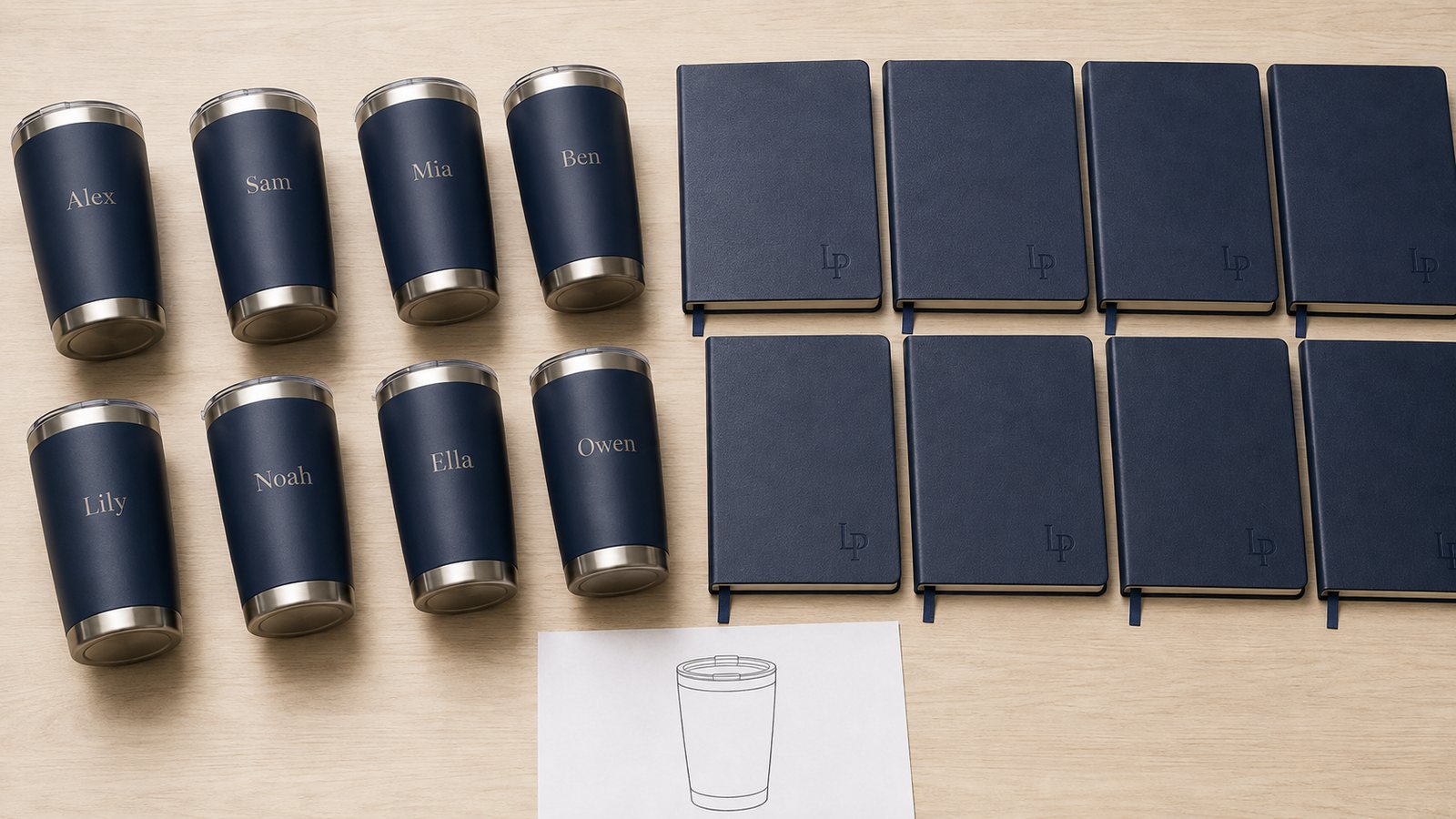
Every product on our site shows its own minimum on the product page, and those minimums are real numbers set by how the item is made and decorated, not marketing. A stainless tumbler that is laser-engraved one at a time can have a low minimum. A woven label needs a loom program and a production run, so its minimum is higher. A screen-printed tee needs screens burned per color, so the minimum reflects the point at which that setup stops dominating the price.
Setup is charged once per design and reused on reorders. That single fact explains most small-order pricing: the first 50 pieces carry the whole setup, the next 50 carry none of it.
Which methods work under 100 pieces
| Method | Under 100 pieces | Why |
|---|---|---|
| Laser engraving | Yes, at the lowest published minimum | No screens or dies; the file is the setup |
| Heat transfer (DTF, sublimation) | Yes, including mixed sizes and names | Full color, minimal setup, one transfer per item |
| Embroidery | Yes for small marks, with a digitizing setup | Digitizing is paid once; per-piece stitching cost does not fall much with volume |
| Screen printing | Usually not below 50 to 100 | Screens per color; unit cost falls steeply only with volume |
| Debossing | Yes if the die exists; otherwise wait for volume | Die tooling is the setup |
| Woven labels, chenille patches | Rarely | Loom or patch production runs have their own minimums |
For a fuller comparison of the methods themselves, see How to Choose a Decoration Method.
How unit cost behaves as quantity falls
Three things happen to a quote when the quantity drops:
1. Setup stays flat. A per-design setup fee costs the same for 25 pieces as for 2,500. Spread over 25 pieces it can exceed the product cost; spread over 2,500 it disappears.
2. Unit price steps up at each quantity break. Product pages publish tiered pricing; the price at the lowest tier is the honest small-order price, and it is higher than the price at the next break.
3. Shipping stops being negligible. A carton of 25 items ships at roughly the same cost as a carton of 100.
The test is simple. Ask for the per-piece cost including setup and shipping at the quantity you want, and at the next quantity break. If the next break costs less than 20% more in total and you will use the extra pieces within the year, order the larger run. If you will not, order the small run and keep the artwork on file; the reorder will be cheaper.
Where print-on-demand changes the answer
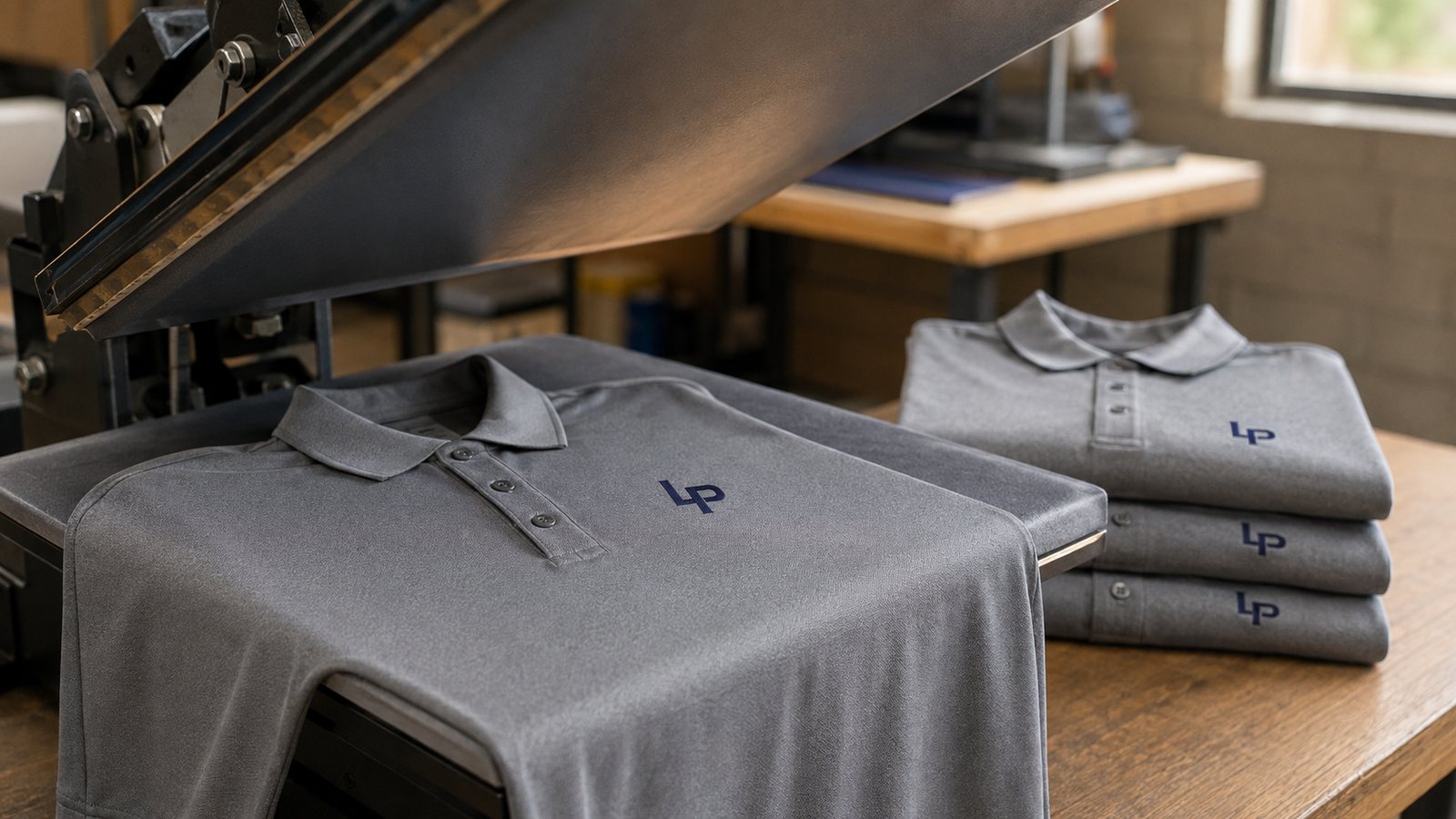
Print-on-demand means decorating each piece as it is ordered, with no inventory and no run. Industry reporting in 2026 is clear about its place: 78% of distributors treat POD as a complement to traditional decoration rather than a replacement, and suppliers who run both describe the winning approach as blending them, applying each where it makes economic sense. The cases where POD is the better tool:
- Personalization at scale. A name on every bottle, journal or tech accessory used to require large minimums and complex kitting. With POD, a company can produce hundreds of individually personalized gifts one at a time.
- Unpredictable or same-day demand. Event-day tees, seasonal programs where speed beats forecasting, and company stores where nobody knows how many mediums will sell.
- Testing designs. Decorate a handful of pieces in two or three designs, see what the audience picks, then commit the volume to the winner with a traditional method.
The cases where POD is the wrong tool are just as clear: a single-color logo on hundreds of cotton tees or totes, or any item that will be washed for years and deserves embroidery or engraving. There, a traditional run gives a lower unit cost and a more durable result.
A practical way to buy small
- Pick the item for the method, not the other way round. Metal, bamboo and PU take engraving and debossing at low quantities; polyester and performance fabric take heat transfer; cotton wants screen printing at volume.
- Send vector artwork once. A clean file means one setup that is reused forever. A JPEG means a redraw charge on top of the setup.
- Group small needs into one design. Ten people who each want five tumblers with the same logo are a 50-piece run with one setup, not ten setups.
- Ask for a single-item proof. For a small run, a proof of the decorated item tells you more than the artwork proof, and it costs less than getting 40 pieces wrong.
What to send us
The item you are considering, the quantity you need now and the quantity you might need in the year, your logo as a vector file, and whether any pieces need individual names. We will quote setup and unit cost separately at your quantity and at the next break, so the decision is on the page. Customize a single item to see the methods available on it, or request a quote for a run.
Frequently asked questions
What is the minimum order for custom promotional products?
It depends on the item and the decoration method; each product page shows its own minimum. Laser-engraved and heat-transfer items carry the lowest minimums; screen-printed and woven items need a larger run.
Why is there a setup fee on a small order?
Setup (screens, digitizing, dies, laser files) is a one-time cost per design. On a small order it is a large share of the total; on a reorder against the same artwork it is not charged again.
Is print-on-demand cheaper than a bulk order?
Per piece, no. Print-on-demand avoids inventory and minimums and allows personalization, but a traditional run of the same simple logo costs less per piece at volume.
Can I order a very small quantity of a custom item?
Each product page shows its minimum, and engraved and heat-transfer items carry the lowest ones. Use the single-item customization flow to pick one product and decoration method, then quote it at the minimum shown. Items that require screens, looms or dies need a larger run.
Sources
- Print & Promo Marketing, "The New Status Quo: Print on Demand," February 2026 (78% of distributors treat POD as a complement; use cases quoted from decorators): https://www.printpromomarketing.com/
- PPAI Research, "2026 New-ish Trends," PPAI Magazine, January 2026 (buyer priorities under tight budgets): https://www.ppai.org/media-hub/
Ready to Put This Into Practice?
Published per-unit merchandise prices are binding at the listed quantity tiers. Decoration or imprint, applicable setup, rush-production, and shipping charges are confirmed in your written quote.
Request a Quote