Eighteen campaigns won PPAI Pyramid Awards this year. Strip away the budgets and the brands and five patterns remain, each of which a mid-size company can copy.
Eighteen campaigns won PPAI Pyramid Awards this year. Strip away the budgets and the brands and five patterns remain, each of which a mid-size company can copy.
Key takeaways
- The winning programs were built around a moment (a launch, a start date, a game, a week), not around a product.
- Products were chosen to be used together, in a set, and often shipped to homes rather than handed out.
- The best results came from pairing an object with an experience: a demo, an event, a QR link, a live reveal.
- Measured results ranged from an 830% return on projection to a merchandise drop that sold out in 24 hours; the common thread is that each program had a number it was trying to move.
PPAI's Pyramid Awards have recognized the best client promotions for more than 60 years. The 2026 winners, for programs run between April 2024 and April 2025, ranged from a Fortune 500 employee gift to a children's science kit funded by donations. Reading all eighteen, the interesting part is not the size of the budgets. It is how similar the underlying decisions are.
1. Start from a moment, not a product
None of the winning programs began with "we need tumblers." Each began with a date on someone's calendar: a software launch with a virtual demo, a new financing program rolling out to dealerships, the Monday after the Super Bowl, a museum's summer learning season, a hospital's Patient Experience Week. The product was chosen because it made that moment more tangible.
How to copy it: list the next twelve months of moments your company already has (onboarding cohorts, product launches, trade shows, year-end, anniversaries) and attach a merchandise decision to each one, rather than reordering the same giveaway every quarter. (For the onboarding moment specifically, see New-Hire Welcome Kit: The Six-Item Base.)
2. Pair the object with an experience
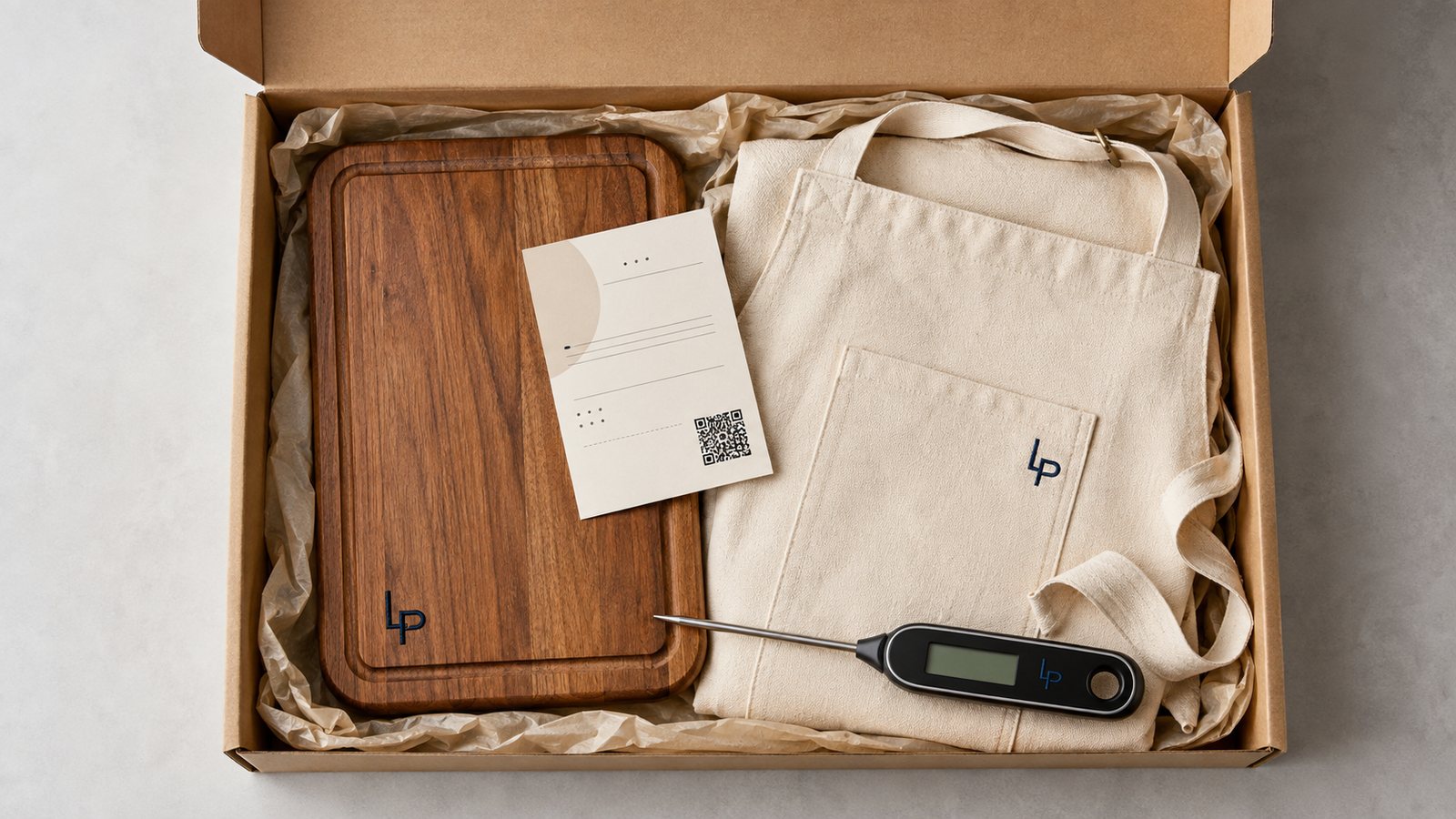
The gold winner in business-to-business programs, a data-analytics company's product launch, sent more than 300 customers and prospects a branded barbecue kit (engraved cutting board, apron, thermometer, recipe card) timed to arrive before a virtual event that mixed product demos with guided grilling segments. PPAI reports the program returned roughly 830% over projections and became the company's second-strongest pipeline driver after its free trial. The kit alone would have been a nice gift; the kit plus the event was a sales program.
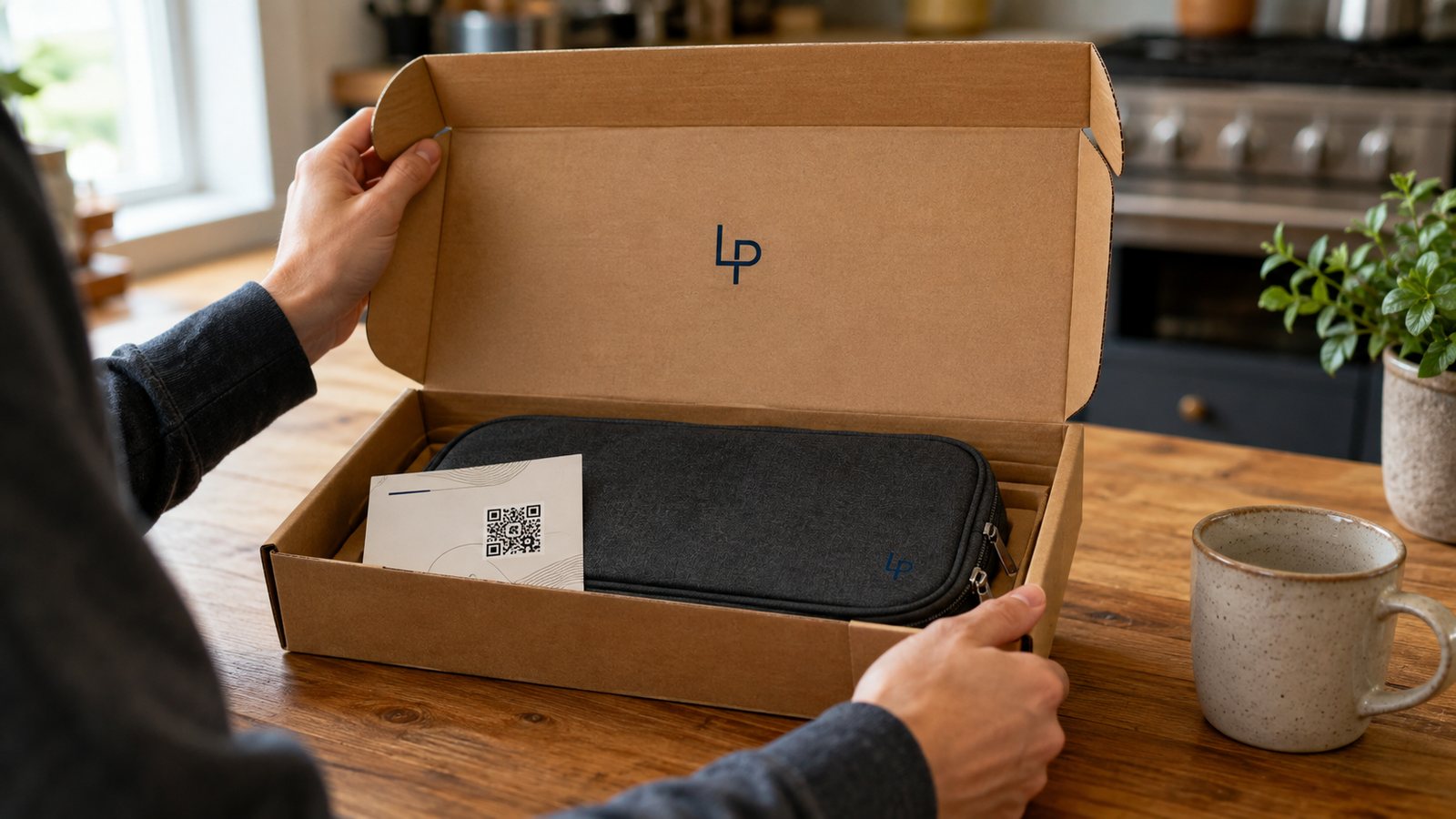
How to copy it: give every kit a reason to be opened at a particular time, whether that is a live session, a video linked by QR code on the insert card, or a recipe, a challenge or a first-day agenda printed inside the lid. (The insert card is covered in Custom Packaging: 5 Unboxing Details That Add Value.)
3. Ship a set to the home, not a handout to the lobby
Several winners were mailers. A university sent high-school counselors a build-it-yourself campus set to refresh them on admissions in a format they would keep on a desk; a global insurer sent a year-end tech organizer to 45,000 employees with a QR code that showed the rainforest area each gift protected. In both cases the recipient opened the package alone, at home or at a desk, which is where the unboxing experience does its work.
How to copy it: for remote teams and dispersed customers, plan the box as part of the product from day one, and use the outer carton as the first branded surface. Direct-to-home also means one address list, so ask your supplier to kit and ship per recipient rather than shipping cases to your office.
4. Make the set look like one set
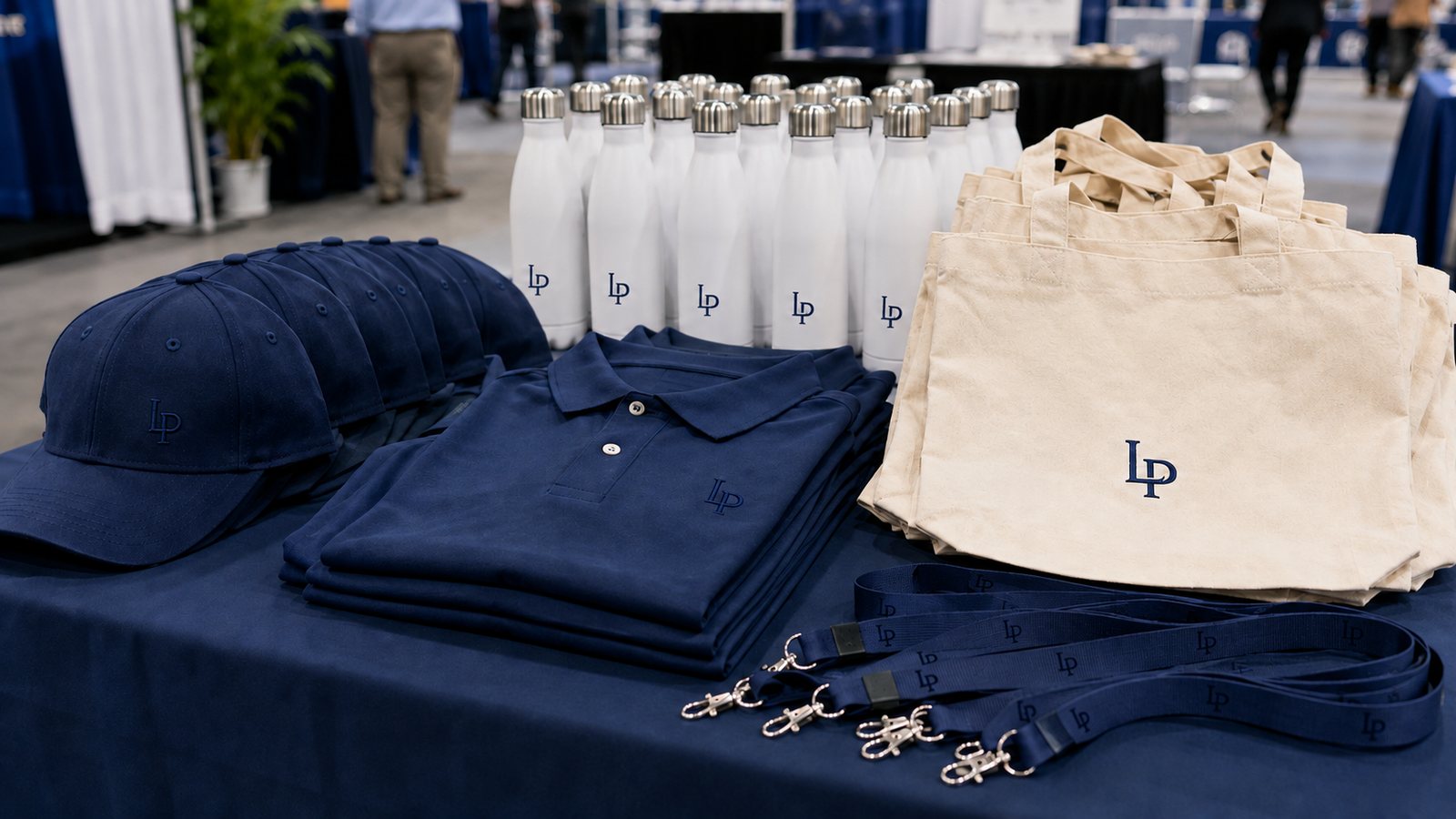
The winning kits share a visual discipline: one color story, one logo treatment, coordinated packaging. A children's STEM kit (custom box, pencil set, seed packets, printed guides) followed a single color palette so that a box of four separate activities read as one program, and the packaging itself became the greenhouse for one of the experiments. A golf fundraiser's VIP kits, caps, polos, volunteer apparel and signage were built as one identity across two days.
How to copy it: decide the decoration method per material once (embroidery on fleece, engraving on metal, deboss on PU, print on paper) and reuse the same artwork file at fixed sizes across every item. (Method choice is covered in How to Choose a Decoration Method.) Building the whole set with one supplier is what keeps the colors matched.
5. Decide the number before you order
Every winning entry reported a result, and the results were specific: pipeline return over projection, a limited merchandise drop that sold out within 24 hours, more than 6.7 million impressions from a single novelty item, $300,000 raised at a 25th-anniversary event, 1,100 patients reached in a week. None of these are vanity counts; each maps to what the program was for.
How to copy it: before the quote, write one sentence: "This program succeeds if ___ by ___." Reorders, demo sign-ups, event attendance, survey scores and social mentions are all measurable. A number decided in advance also settles the budget argument, because it makes the merchandise a cost of a result rather than a cost.
Five patterns, five product bundles
| Pattern | Moment | Bundle that fits |
|---|---|---|
| Launch with a demo | Product or program launch | Engraved board or tumbler, apron or tee, printed card with QR to the demo, magnetic box |
| Home-delivered onboarding | Start date | Tumbler, backpack, hoodie, notebook and pen, lanyard, webcam cover, welcome card |
| Field or event presence | Trade show, game day, campaign week | Wristbands, totes, pens, lanyards, caps, in one color story |
| Recognition at scale | Year-end, milestones | Tech organizer or quarter-zip, engraved keychain, card linking to the cause or the thank-you video |
| Community and education | Seasonal program, fundraiser | Drawstring bags, bottles, caps, printed guides, reusable packaging |
What to send us
The moment, the audience and the number you want to move. From that we can propose a bundle, show a proof of every item before production, and photograph the finished kits before they ship. Start a project or request a quote.
Frequently asked questions
What makes a promotional campaign successful?
A defined moment, a product set chosen for that moment, an experience attached to the product, and a result decided in advance. The 2026 Pyramid Award winners share all four regardless of budget.
How is ROI measured on promotional products?
By the number the program was meant to move: pipeline generated against projection, sales of a limited drop, event attendance, funds raised, impressions or reorders. The measure is set before the order, not after.
Are kits better than single giveaways?
For onboarding, launches and recognition, yes: a matched set read as one gift and carries an experience. For events and mass reach, a single well-made item with a clear message often outperforms a kit.
Do small companies win these awards?
The 2026 winners include a regional nonprofit golf event, a children's museum program funded by donations and a health-education key tag. Scale helps with reach, not with the quality of the idea.
Sources
- PPAI, "Inspiring Client Promotions: PPAI's 2026 Pyramid Awards," PPAI Magazine, March 2026 (18 Client Program winners; program descriptions and reported results): https://www.ppai.org/media-hub/
- PPAI Research, "Product Power 2026," PPAI Media, 2026: https://www.ppai.org/media-hub/
Company and campaign names are cited from PPAI's published award coverage and belong to their respective owners; no endorsement or affiliation is implied.
Ready to Put This Into Practice?
Published per-unit merchandise prices are binding at the listed quantity tiers. Decoration or imprint, applicable setup, rush-production, and shipping charges are confirmed in your written quote.
Request a Quote